Slow-scan TV (SSTV)
Still pictures sent as sound, one line at a time. A picture takes about 30 seconds to 2 minutes.
Slow-scan TV sounds like a warbling, whistling tone that sweeps up and down in pitch, punctuated by a regular tick several times a second, and runs for about 30 seconds to two minutes.
What does it sound like?
A steady, sweeping, whistling sound with a regular rhythm, starting with a short musical tone sequence.
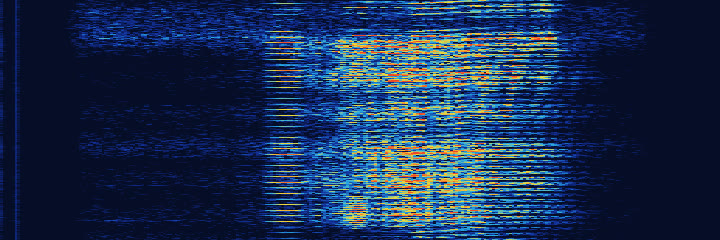
12-second example. Recording: Freesound recording freesound-sstv-14230khz-553698 (CC0).
Who uses it?
Amateur radio operators, and special events such as picture broadcasts from the International Space Station.
Where and when can I hear it?
Around 14.230 MHz on shortwave. Space station picture events: 437.550 MHz in 2026 (earlier events used 145.800 MHz); dates are announced on ariss.org.
What do the decoded parts mean?
- Image: The picture, built up line by line.
- Mode: The format used (for example Scottie 1, Martin 1, Robot 36, PD120), which sets the size, colors and speed.
Easily confused with
- Weather fax (radiofax): fax is slower and black and white
- Weather satellite pictures (APT): APT is a steady tick-tock at 137 MHz
How to recognize it
An SSTV picture opens with a short, recognizable header: two steady tones with a brief break between them, followed by a quick burst that tells the receiver which format is coming. After that the picture itself is sent as a continuous tone whose pitch follows the brightness of the image, from about 1500 Hz for black to 2300 Hz for white.
Between image lines you hear a short, lower sync pulse at 1200 Hz. That repeating pulse gives SSTV its steady "tick... tick..." rhythm, and the pitch in between sounds busier over detailed parts of the picture and smoother over plain sky.
Easily confused with:
- Weather fax: a similar line-by-line scan, but slower and harsher, about two lines per second for many minutes, and with no musical header.
- NOAA weather satellites (APT): a steady "tick-tock" of two lines per second heard only during a satellite pass on 137 MHz.
- Fax-like data modes: steady rhythms with no pitch sweeping to the picture content.
Where and when to hear it
On shortwave, the classic meeting place is 14.230 MHz (upper sideband), with 14.233 as an overflow; you will also find SSTV around 7.171, 3.845, 21.340 and 28.680 MHz. Weekends are busiest. Operators often send picture replies, test cards or their station photo.
The International Space Station runs occasional SSTV events through the ARISS program, sending a themed series of pictures for several days. These are announced ahead of time on ariss.org, and all you need to receive them is a simple VHF or UHF receiver and patience for the station's passes overhead.
A little history
Copthorne Macdonald developed slow-scan television in the late 1950s as a way to send pictures through a voice-sized radio channel. Early stations used long-persistence radar screens to view each image as it slowly built up. In the 1970s, dedicated scan converters made color pictures practical, and from the 1990s personal computers with sound cards replaced most dedicated hardware.
Today dozens of formats exist. The most common include Martin 1 and Scottie 1 (each just under two minutes for a color picture), Robot 36 (36 seconds) and PD120 (about two minutes), which space station events often use.
Common questions
Is it legal to receive SSTV pictures?
Yes. Amateur SSTV and the space station's picture events are open transmissions meant to be received by anyone. The pictures themselves still belong to whoever made them, so ask before republishing someone else's image.
Why does SSTV sound the way it does?
Each pixel's brightness is sent as a pitch. As the scan moves across a line, the tone slides up and down with the picture, and each line starts with a short sync pulse, which is what gives the sound its regular tick.
How do I decode SSTV on a computer or phone?
Free programs such as MMSSTV (Windows) and QSSTV (Linux), and free phone apps, can turn the audio into a picture. Many will even work from a phone held near a radio's speaker, though a direct audio cable gives cleaner results.
Why is my SSTV picture slanted?
A slant means the decoding program's timing is slightly different from the sender's. Most programs have a slant or clock-correction setting that fixes it.