PSK63 / PSK125
Faster versions of PSK31 that trade a little robustness for speed.
What does it sound like?
Like PSK31 but a slightly rougher, faster warble.
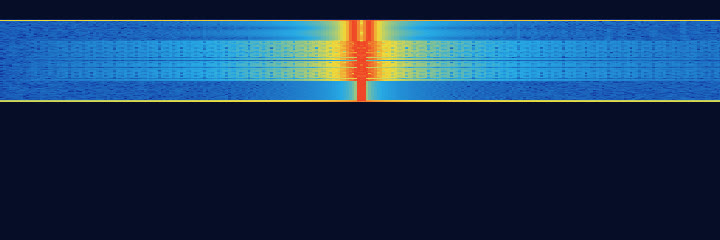
12-second example. A clean example made with the free fldigi program (BPSK63); signals on the air usually sound noisier.
Who uses it?
Amateur radio operators; popular in some European contests.
Where and when can I hear it?
Near the PSK31 frequencies, for example around 14.070 MHz.
The science
PSK63 and PSK125 use exactly the same method as PSK31, a single phase-reversing tone carrying Varicode text, but at 62.5 and 125 symbols per second. Doubling the symbol rate doubles both the typing speed and the bandwidth: PSK63 runs about 100 words per minute in roughly 63 Hz, and PSK125 about 200 words per minute in roughly 125 Hz. Like standard PSK31 they carry no error correction, although related variants such as PSK63FEC and the "R" (robust) modes add it.
Why use it?
The faster rates move text two to four times as quickly as PSK31, which shortens each transmission and makes longer messages practical. fldigi's documentation also notes that the slower PSK modes are more affected by ionospheric Doppler phase changes, so the faster rates are less affected.
Lore
Close relatives with error correction exist: fldigi's robust PSK modes, invented by John Douyere, add forward error correction and interleaving for roughly a 4 dB gain over plain PSK and are used mainly by the PskMail community.
Easily confused with
- PSK31: PSK31 is half as fast